One game · read from Dhaka
Chicken Road, read from Bangladesh: the board and the cashier
Chicken Road is a one-button game with a printed price on every step, and almost everything written about it in Bangladesh skips the part that actually costs money — not the board, the cashier. This page does both: what the game is, what each difficulty card is really selling, and the route a Tk 500 deposit takes before it becomes a stake and after it becomes a win.
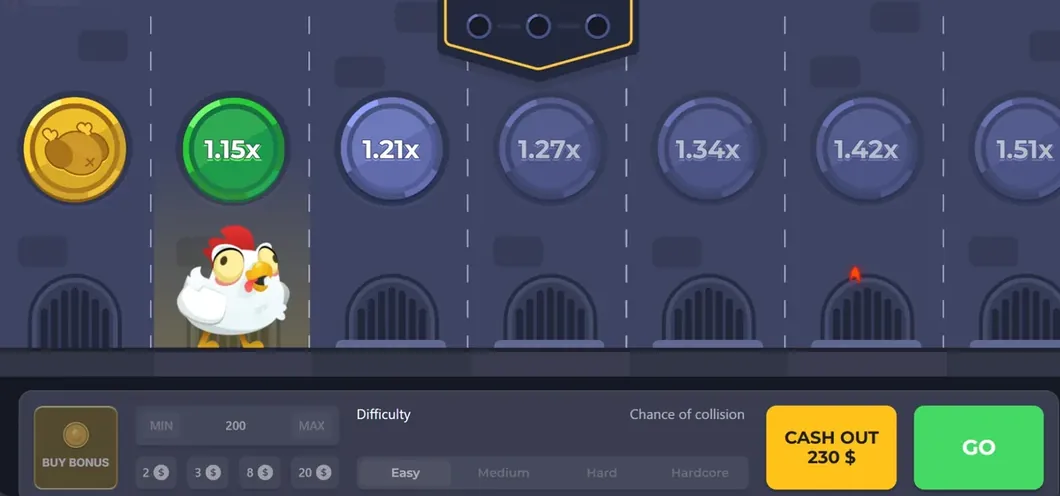
AdvertisementPlay the chicken road game and take a 150% first-deposit bonusOpen Vave18+ · from 20 USDT · Vave's own terms applyChicken Road is the easiest casino game in the lobby to learn and one of the easiest to misread. A chicken stands at the kerb. In front of it is a row of lanes, each with a number printed on it — 1.01, 1.02, 1.05, and on upward. You press once and the chicken walks into the first lane. Press again and it takes the second. At any point you press cash out and the number under its feet multiplies your stake. Somewhere ahead, on a lane that was picked before you moved at all, there is a car.
That is the whole game. There is no bonus round to learn, no paytable to memorise, no symbols to match. Which is exactly why the interesting questions about it are not about the board.

What Chicken Road actually is
The game comes from InOut Games, and the studio's own product card for the title says three useful things: it is single player, its release day was 4 April 2024, and its return is 98%. That release date settles an argument that runs through every forum thread about the game in Bangla and in English — there is no older, more generous “original version” from before, because before 4 April 2024 there was nothing.
The 98% is the studio's published figure for the title, and it is the only return figure this site will print, because it is the only one with a name attached to it. A percentage that appears in a casino's own info panel can differ from the studio's headline number, and a percentage quoted in a blog post with no source behind it is not a figure at all.
What 98% means in practice is less comfortable than it sounds. It is a long-run average across every round anybody plays, at every difficulty, including the ones that end on lane one. It says nothing about your session, and it is not a promise that Tk 100 becomes Tk 98. It is the size of the edge, and the edge is the whole business model.
The mechanic underneath is worth stating plainly, because it is where most of the bad advice comes from. When you commit a stake, the round is decided: the game server places the car and prints the ladder. The chicken walking across the screen is a presentation of a result that already exists. There is no “good moment” to press, no rhythm to read, no tell in the animation. Every press after the stake does exactly one thing — decides how much of the already-printed ladder you claim before the already-placed car.
The quick answers
- Who made it. InOut Games. The same studio signs MegaBlock Empire, KO Million, Tower Dash, Dragon Pots, Rump And Friends, Joker's Clash, Royal Drop, Wheel Out and Frog Jump.
- Released. 4 April 2024. Chicken Road 2 followed it.
- Return. 98%, from the studio's own product card for the title.
- Difficulty cards. Four: Easy, Medium, Hard, Hardcore. The in-game rules call the fourth one Daredevil; the interface calls it Hardcore. Same card.
- Lanes. 30 on Easy, 25 on Medium, 22 on Hard, 18 on Hardcore.
- Ceilings in Chicken Road 2. ×200, ×5,000, ×240,000 and ×1,000,000, in that order. In the first game Medium tops out at ×14,000 instead, and the other three ceilings match.
- Maximum stake in Chicken Road 2. 200 a round, in the casino's own unit.
- Taka. No casino in the table below takes it directly. All of them run a crypto cashier.
The same answers as a table, because the two builds differ in exactly one cell of it:
| Card | Lanes | Ceiling, Chicken Road 2 | Ceiling, first game | Free spins | Volatility on the card |
|---|---|---|---|---|---|
| Easy | 30 | ×200 | ×200 | 9 | low |
| Medium | 25 | ×5,000 | ×14,000 | 7 | medium |
| Hard | 22 | ×240,000 | ×240,000 | 5 | high |
| Hardcore | 18 | ×1,000,000 | ×1,000,000 | 3 | very high |
Every figure in that table was read off the game's own cards and its own rules panel. The one bold cell is the whole difference between the two titles.
The four difficulty cards, and what each one is selling
The difficulty row is labelled with the honest phrase: in Chicken Road 2 it reads chance of being shot down, and in the first game chance of collision. That is the product. You are not choosing how hard the game is; you are choosing how much risk you are buying per step, and every card sells the same 98% in a different shape.
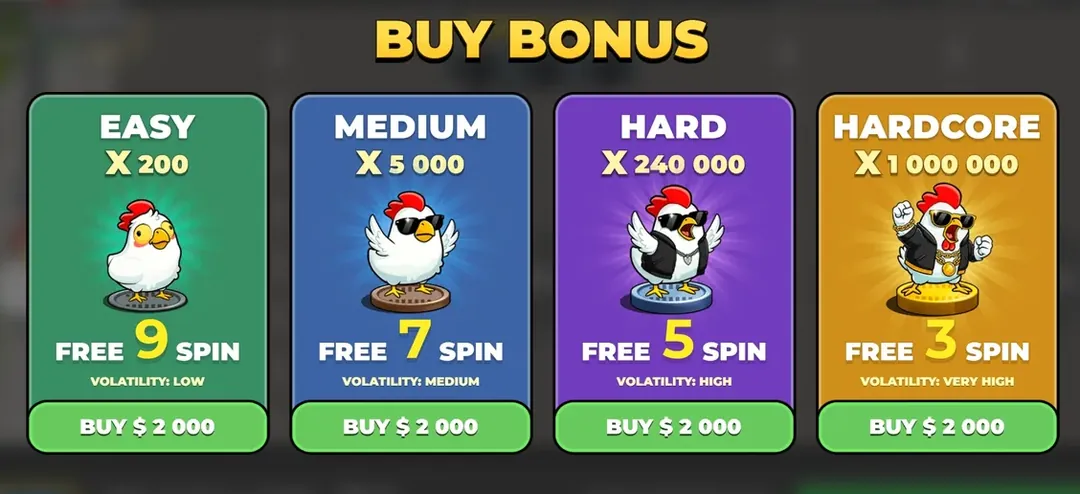
Easy: 30 lanes, ceiling near ×5. The ladder starts at 1.01, 1.02, 1.05, 1.09, 1.13, 1.18 and climbs slowly through the 1.55–2.27 range before finishing at 3.70, 4.22, 4.93. Thirty presses to roughly five times the stake. What Easy actually sells is session length: a lot of rounds that end slightly up or slightly down, and very few that end anywhere memorable.
Medium: 25 lanes. The ladder opens harder — 1.06, 1.20, 1.36, 1.54, 1.76, 2.03 — so six steps on Medium is worth about what eleven is on Easy. The ceiling is ×5,000 in Chicken Road 2 and ×14,000 in the first game, which is the single largest difference between the two titles and the reason some players still open the older one.
Hard: 22 lanes, ceiling ×240,000. The first step already pays enough to notice, and the far end of the ladder is a number nobody sensible is playing for.
Hardcore: 18 lanes, ceiling ×1,000,000. Eighteen presses, and a ceiling with six zeroes. Reaching it means every one of the eighteen lanes came up clean.
A note on that last number, because it gets quoted constantly. If a maximum win pays ×1,000,000, the rough frequency of it is about one in a million rounds — that is arithmetic on the multiplier, not a figure published by anyone, and this site marks it as a calculation rather than a fact. At the maximum stake in Chicken Road 2, that is a very expensive lottery ticket bought 200 at a time.
One round, lane by lane
It helps to walk a round rather than describe it.
Easy card, stake of 1. Press once: the chicken is on lane one and the number under it is 1.01. Cashing out now returns 1.01 — a profit of one hundredth of the stake, which is the point of the first lane. It exists so that stopping immediately is not free money. Press again: 1.02. Again: 1.05, then 1.09, 1.13, 1.18. Six presses in, the stake has grown by less than a fifth, and there are twenty-four lanes left.
Keep going and the ladder spends most of its length in the 1.55 to 2.27 range — this is the long middle where nothing much happens and where most players stop, not because the number is right but because the pressing gets boring. Only at the very end does it move: 3.70, then 4.22, then 4.93 on lane thirty. Almost all of the Easy card's value sits in its last three lanes, and reaching them means thirty clean presses.
The first six presses on the two cards most people actually open, side by side:
| Press | Easy | Medium |
|---|---|---|
| 1 | 1.01 | 1.06 |
| 2 | 1.02 | 1.20 |
| 3 | 1.05 | 1.36 |
| 4 | 1.09 | 1.54 |
| 5 | 1.13 | 1.76 |
| 6 | 1.18 | 2.03 |
Six presses on Medium is worth about eleven on Easy. Easy then finishes 3.70, 4.22, 4.93 on lanes twenty-eight to thirty; Medium still has nineteen lanes to run at that point.
Now the same stake on Medium. Press once: 1.06. Then 1.20, 1.36, 1.54, 1.76, 2.03. Six presses and the stake has doubled, against a fifth on Easy — and the row above the cards, the one labelled chance of being shot down, is telling you exactly what you paid for that. The ceiling is ×5,000 in Chicken Road 2 and ×14,000 in the first game, twenty-five lanes away.
The two rounds are the same game with the same 98% behind them. What differs is how the 98% is distributed: Easy spreads it thinly across thirty small steps, Hardcore concentrates it into eighteen large ones and a ceiling of a million. Neither is the better card. One of them matches how many presses you are actually going to make, and that is the only question the difficulty row is asking.
The bonus, and what it is actually worth
Above the road there is a counter. In Chicken Road 2 it fills with three fires; in the first game, three golden eggs. Fill it and the bonus round starts.
What happens inside it is unusual for a casino game, and worth knowing before you buy it: the chicken walks on its own and stops one step before the danger, and the result is paid out automatically. You are not playing the bonus, you are watching it settle. The free-spin counts run 9 on Easy, 7 on Medium, 5 on Hard and 3 on Hardcore — fewer spins the harder the card, which is the same trade the rest of the game makes.

The bonus can also be bought outright, and the pricing is the flattest in the lobby: it always costs exactly 100 stakes. At a stake of 5 that is 500; at 10 it is 1,000; at 20 it is 2,000; at the Chicken Road 2 maximum of 200 it is 20,000.
| Stake | Price of the bonus buy | Cards it applies to |
|---|---|---|
| 5 | 500 | all four |
| 10 | 1,000 | all four |
| 20 | 2,000 | all four |
| 200 | 20,000 | all four |
Figures in the casino's own unit, not in taka. Nothing on that panel is priced per card: the ceiling changes, the price does not.
This desk recorded four purchases, one on each card. Easy: 20,000 spent, 24,314 returned — 1.22 times the price. Medium: 500 spent, 463.75 back — 0.93. Hard: 1,000 spent, 565 back — 0.57. Hardcore: 2,000 spent, 357.60 back — 0.18.
| Card | Paid | Came back | Multiple of the price |
|---|---|---|---|
| Easy | 20,000 | 24,314 | 1.22 |
| Medium | 500 | 463.75 | 0.93 |
| Hard | 1,000 | 565 | 0.57 |
| Hardcore | 2,000 | 357.60 | 0.18 |
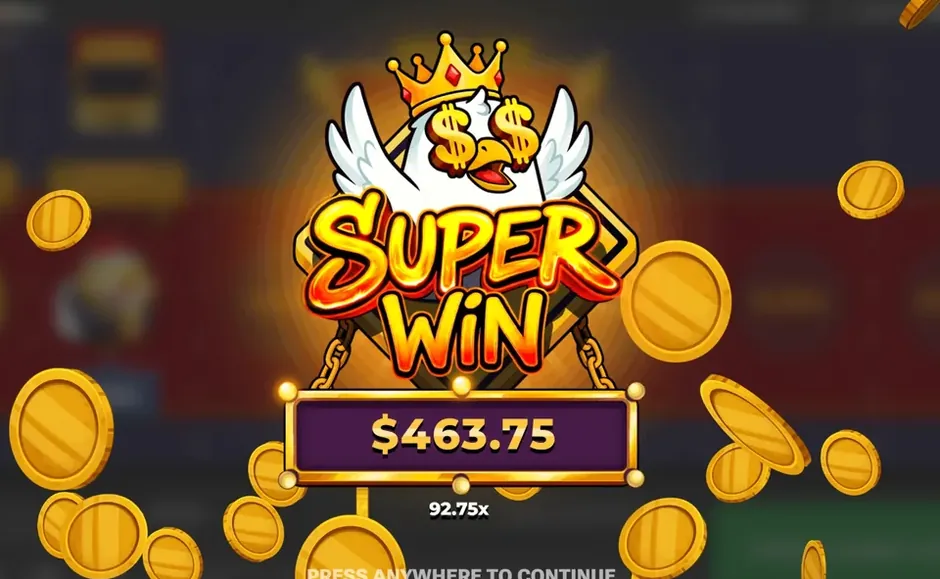
Four purchases are four purchases. They are not a return figure, they do not predict the fifth, and anyone presenting numbers like these as a strategy is selling something. What they do show is the shape of the thing: the harder the card, the wider the bonus buy swings, and on Hardcore a single purchase came back at under a fifth of its price.
What a Tk 500 deposit actually buys
This is the part that gets skipped, so let us do it first and properly.
Every casino in the table below runs a crypto cashier. That means taka does not arrive at the game; stablecoin does. A Tk 500 deposit is therefore not one transaction but a small chain: taka leaves bKash or Nagad, goes through an exchange or a P2P trade, becomes USDT or another coin, and travels to the casino. Each hop has a fee and a delay, and the fee is a larger share of a small deposit than of a large one.
Written out, a Tk 500 deposit is six steps, and only one of them is the game:
- Taka leaves bKash or Nagad, to an exchange account or to a P2P counterparty.
- It becomes USDT or another coin, at that day's rate and with that desk's spread.
- The coin moves to the casino address, on a specific network, with a network fee.
- It becomes a balance, and the game rounds a stake out of it.
- A withdrawal request goes the other way, under whatever limit and verification the operator's terms set.
- The coin becomes taka again, through the same kind of trade, at a new rate and a new spread.
Steps 1, 2, 3, 5 and 6 all cost something. Step 4 is the only one anybody writes about.
Then the stake sizes bite. Chicken Road 2 runs quick chips of 1, 2, 5 and 10 under the stake box; the first game offers 2, 3, 8 and 20 instead. Those are in the casino's unit, not in taka.
| Build | Quick chips under the stake box | Highest stake on the panel photographed |
|---|---|---|
| Chicken Road 2 | 1, 2, 5, 10 | 200 |
| The first Chicken Road | 2, 3, 8, 20 | 200 |
Against a balance converted from a few hundred taka, the smallest chip on the first game is already a meaningful fraction of the whole thing — which is why a player who deposited a small amount ends up on Easy pressing thirty times for a ×4.93 that, after two conversions, is worth less than it looked on screen.
None of that is a reason not to play. It is a reason to do the arithmetic before the cashier rather than after the round, and it is the single most useful thing this site can tell a reader in Bangladesh. The deposits and withdrawals page follows the route step by step, including the part most guides leave out: the return trip, which is slower and has more rules attached to it than the way in.
Where the game runs, and on whose terms
The table is the casinos this desk could read something real about: a licence number that resolves in a register, a published list of restricted countries, a stated position on verification. Every one of them was checked against Bangladesh specifically, and every one of them states in its own terms that this country is not on its restricted list.
-
Vave
- Score7 / 10
- Coins6
- Withdrawal limitnot published
- Before ID checkcase by case
- OperatorLatcas B.V.
- LicenceCuraçao Gaming Authority
-
Bitcasino.io
- Score9 / 10
- Coinsnot read
- Withdrawal limit1,000,000 USDT /week cl. 6.10
- Before ID check2,500 EUR
- OperatorMoon Technologies B.V.
- LicenceCuraçao Gaming Authority
-
Rocketpot
- Score9 / 10
- Coins13
- Withdrawal limit5,000 USD /month cl. 11.5
- Before ID checkUS$2,500
- OperatorDanneskjold Ventures B.V.
- LicenceCuracao
-
Wild Fortune
- Score8 / 10
- Coins10
- Withdrawal limit15,000 EUR /month cl. 11.8
- Before ID checkcase by case
- OperatorMetlait SRL
- LicenceAnjouan Gaming Board
-
DuckDice
- Score7 / 10
- Coins10
- Withdrawal limitnot published
- Before ID checkcase by case
- OperatorZentari Limitada
- LicenceAnjouan Gaming Board
-
Empire.io
- Score7 / 10
- Coinsnot read
- Withdrawal limitnot published
- Before ID check2,000 USDT
- OperatorPixel Entertainment Limited
- LicenceAnjouan Gaming Board
-
Metaspins
- Score7 / 10
- Coins8
- Withdrawal limitnot published
- Before ID checkcase by case
- OperatorMetaspins N.V.
- LicenceCuraçao Gaming Authority
-
Rainbet
- Score7 / 10
- Coins9
- Withdrawal limitnot published
- Before ID checkcase by case
- OperatorRBGAMING N.V.
- LicenceAnjouan Gaming Board
 Vave
Vave Bitcasino.io
 Rocketpot
 Wild Fortune
 DuckDice
 Empire.io
 Metaspins
 Rainbet
Two things to read straight. The score in each row is the same arithmetic for everyone — the same checks, the same denominator, a missing answer scoring zero rather than being quietly dropped — and the methodology page shows the working. And the first row is an advertised placement: the site earns a commission if you open it and deposit, which is what pays for this site. That placement buys the position at the top and nothing else. It does not change the score printed beside it, which is why you can see for yourself that two operators below it score higher. Where a field is blank, nobody here read it — a blank is not a pass mark.
The five at the top, in one line each
Vave — Curaçao licence OGL/2024/1676/0905, held by Latcas B.V., which resolves in the regulator's own register rather than only on the site's footer. Six coins in the cashier, BTC, ETH, USDT, LTC, DOGE and TON. Verification is risk-based under clause 8.7, meaning there is no published amount that triggers it — the operator decides, and you find out when it happens. This is the advertised row.
Bitcasino.io — the highest-disclosure operator in the table. Curaçao OGL/2023/111/0069, held by Moon Technologies B.V., and, unusually, it publishes an actual verification threshold rather than a risk clause. Clause 6.10 caps withdrawals at 1,000,000 USDT a week, which is a limit nobody in this market will reach but which tells you the terms were written by someone who writes limits down. Carries a sportsbook as well.
Rocketpot — running since 2018, longer than most of this table, on Curaçao licence 1668/JAZ held by Danneskjold Ventures B.V. Thirteen coins, the widest cashier here, and a published verification threshold under clause 11.4. The catch is in clause 11.5: withdrawals are capped at 5,000 USD a month. For a small-deposit player that is irrelevant; for anyone who hits a Hard-card ladder it is the most important sentence in its terms.
Wild Fortune — Anjouan licence ALSI-202509073-FI2, held by Metlait SRL. Ten coins. Verification is risk-based under clause 18.1, and clause 11.8 sets a monthly withdrawal cap of 15,000 EUR — three times Rocketpot's, still a cap.
DuckDice — Anjouan ALSI-202509013-FI1, held by Zentari Limitada, ten coins, a sportsbook, and provably fair results on its own games, which is worth something even though it does not extend to a studio title like Chicken Road. Verification is risk-based; the relevant clause is Section 2 rather than a numbered line, which is a small sign of terms that have been edited more than they have been rewritten.
Two things the table cannot tell you, and no site honestly can. First, whether a specific casino's lobby will show Chicken Road to a specific account: game catalogues are cut by country and by licence, and a lobby search that returns a page does not prove the game will open. Second, how fast a withdrawal really is. This desk does not print payout times it has not timed itself, so where that column is empty, it is empty on purpose.
Chicken Road 2, and which of the two to open
Chicken Road 2 is the newer build, and for most people it is the better one: bigger ceilings on three of four cards, a max stake of 200, quick chips that suit a smaller balance. The bonus counter is three fires above the road, where the first game uses three golden eggs.
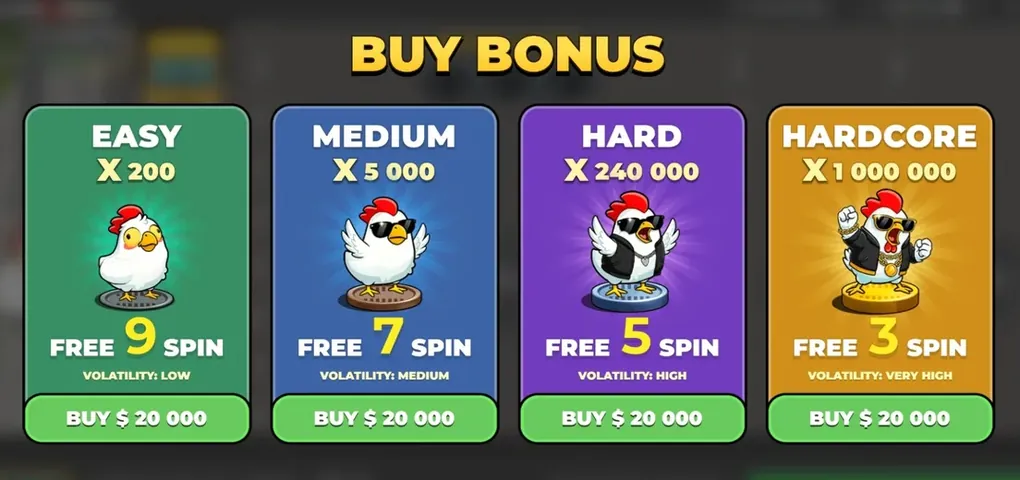
The exception is Medium. In the original the Medium ceiling is ×14,000; in Chicken Road 2 it is ×5,000. If Medium is the card you actually play, the older title is selling a longer ladder for the same edge, and that is a real reason to open it. The full comparison is here, including the free spins, which run 9, 7, 5 and 3 across the four cards, and the bonus buy.
The bonus buy deserves one line on this page because the pricing is unusual: it always costs exactly 100 stakes. 500 at a stake of 5, 1,000 at a stake of 10, 2,000 at 20, 20,000 at 200. Four purchases this desk recorded came back at 1.22, 0.93, 0.57 and 0.18 times what they cost, on Easy, Medium, Hard and Hardcore respectively. Four results are four results — they are not a return figure and should not be read as one — but they do show the shape: the harder the card, the more violently the bonus buy swings.
The demo, and what it will and will not show you
The studio publishes a demo of the title, and it is genuinely useful for one thing: learning where the ladders sit on each card before any money is involved. Press through thirty lanes on Easy and you will understand why the ×4.93 at the end takes so long to arrive, which is not obvious from a screenshot.
What the demo cannot show you is the only variable that actually changes how people play: that the balance is real. Demo credits cannot be withdrawn and cannot be lost, and a player who cashes out at lane 12 in the demo will not necessarily do it at lane 12 with taka behind the number. More on the demo here, including where a real one lives and where the fake ones are.
Chicken Road APK, and why the file is the wrong question
There is steady searching in Bangladesh for a Chicken Road APK and for casino apps generally, and the honest answer is short. InOut Games publishes the game into casino lobbies; it does not publish a standalone app for it. So a file offered as chicken road apk is not the studio's build — it is a wrapper someone else made around a web page, or it is something else wearing the name.
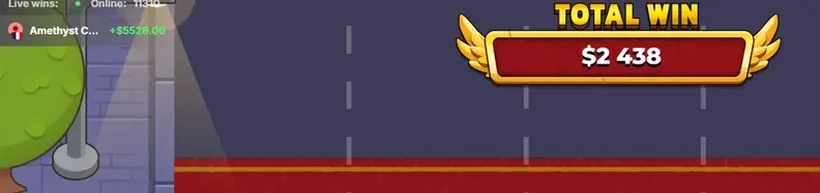
That does not automatically make every such file malicious, and this site is not going to pretend to know what is inside one it has not opened. It makes the file pointless: the same game runs in the phone browser, from the same lobby, with nothing installed and nothing asking for permissions. The app page covers what casino apps in this market actually are, and the one question worth asking before installing any of them.
Five things people repeat about this game that are not true
”There is a predictor app that reads the next round.” There is nothing to read. The car's lane is fixed when the stake is committed, on the operator's server, and no application running on your phone has access to that. What predictor apps do have access to is whatever you type into them.
”The old version pays more.” The first game does have a higher Medium ceiling — ×14,000 against ×5,000 — and that is a real difference worth acting on if Medium is your card. On the other three cards the ceilings match, and the studio's published return is a single figure for the title, not a per-build one.
”Cash out at lane seven, it is the sweet spot.” There is no sweet spot. The edge is identical at every lane, which is what a flat return percentage means. A lane is a decision about variance, not about value, and the only lane that does anything for you is the one you picked before the round.
”It pays better at night / after a loss / on a fresh account.” The round is settled per round, with no memory of the previous one and no clock in it. A losing streak does not make the next round likelier to pay, and a new account is a new account.
”The APK version has better odds.” The studio does not publish a standalone app for this game at all, so there is no APK with any odds, better or worse. Whatever the file is, it is not the game running differently.
Playing safely, in the specific sense
Generic advice is worth nothing, so here is the version that applies to this game and this market.
- Decide the deposit before you open the cashier. Because of the conversion chain, topping up mid-session is slow and expensive, which makes it an accidental brake. Use it as a deliberate one.
- Send a small test amount first. The first transfer to any new address is where the mistakes happen — wrong network, wrong memo, right address on the wrong chain. Lose Tk 50 learning that, not Tk 5,000.
- Read the withdrawal rules before the first deposit. Minimums, limits and what triggers a verification request are all published; they are just published somewhere nobody reads until a win is sitting in the balance.
- Keep the coins in your own wallet with two-factor authentication on, not parked in a casino balance between sessions.
- Only trade P2P with merchants who have a real history. This is where a first deposit most often goes wrong in this market, and it has nothing to do with the game.
- Set the loss limit in the casino, not in your head. Every operator in the table has deposit limits and self-exclusion in its account settings. A limit you set while calm is worth more than one you promise yourself at lane 14.
- Fix the cash-out lane before the round, and keep it. There is no lane that is mathematically correct, so the only rule that does anything is the one you decide in advance.
If any of that starts to feel like it is not a game any more, Gamblers Anonymous runs free meetings, including online ones.
How this site reads the game
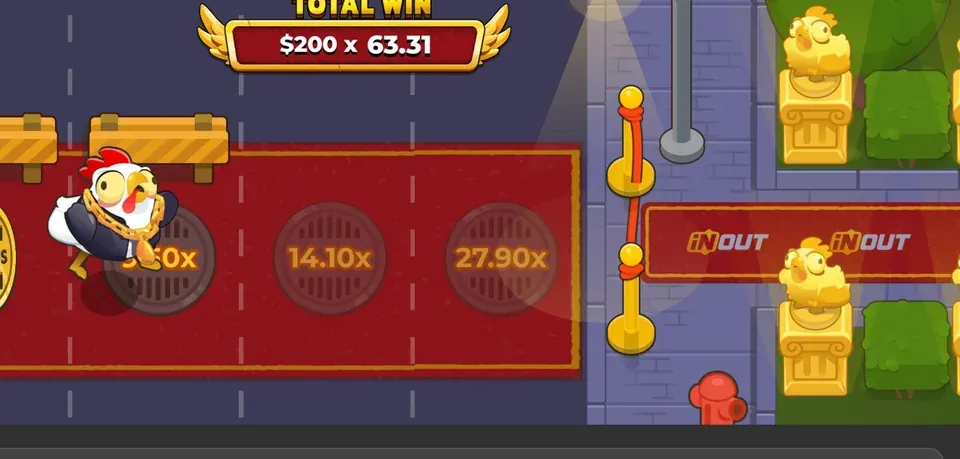
Every number about the game on this site came off the game's own screens or off the studio's own product card, and where neither had an answer, the page says so instead of filling the gap. The lane counts, the ceilings, the free-spin numbers, the ladder steps and the bonus-buy prices were read at the board, not copied from another site. The 98% is the studio's own published figure and is attributed as such.
The casinos are handled the same way and with more suspicion. Licence numbers are checked against the register that issued them, not against the operator's own badge. Restricted-country lists are read, and where one has not been read, the row says unverified rather than implying the answer. Payout speeds are printed only where this desk timed one.
The site takes a commission if a reader opens the advertised casino and deposits. That is how it is paid for, it is disclosed here and on the about page, and it does not buy a position, a score or a sentence.