The game · two builds
Chicken Road 2, and the one card where the first game still wins
Chicken Road 2 is the newer title and on three of four difficulty cards it is simply the bigger one. On the fourth it is not, and the gap is large enough that the card you play should decide which build you open — not which one came out later.
Both titles are in the lobby, both are by InOut Games, and the newer one is not a replacement for the older — it is a second entry beside it. That matters, because the standard advice (“play the sequel, it is better”) is right three times out of four and expensive the fourth time.
The lanes are the same in both
Easy runs 30 lanes, Medium 25, Hard 22, Hardcore 18. That holds in both builds. The difficulty row above the cards is labelled chance of being shot down in Chicken Road 2 and chance of collision in the first game — different wording for the same disclosure, which is more honest than most casino games manage.
The in-game rules text calls the fourth card Daredevil while the interface calls it Hardcore. Same card, two names, and it confuses enough people to be worth saying once.
The ceilings, and the one that differs
| Card | Chicken Road 2 | The first game |
|---|---|---|
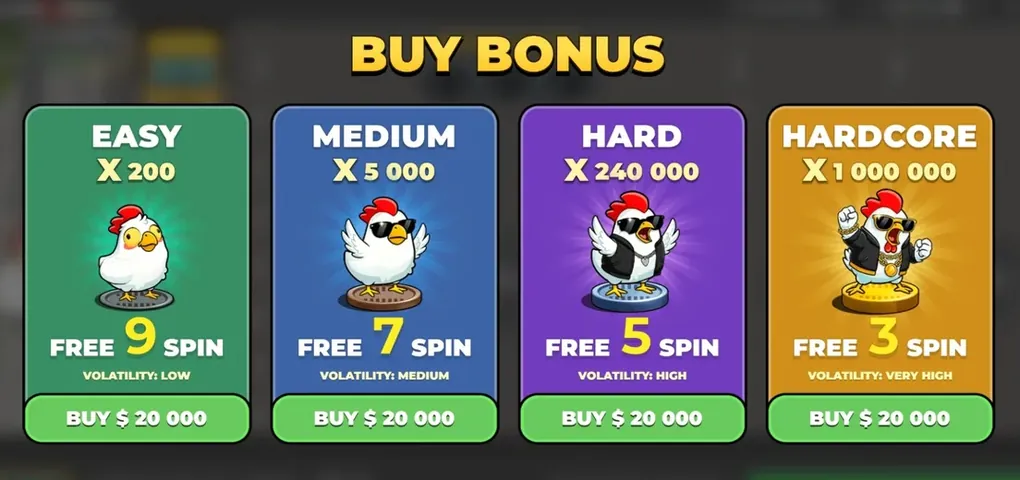
| Easy | ×200 | ×200 |
| Medium | ×5,000 | ×14,000 |
| Hard | ×240,000 | ×240,000 |
| Hardcore | ×1,000,000 | ×1,000,000 |
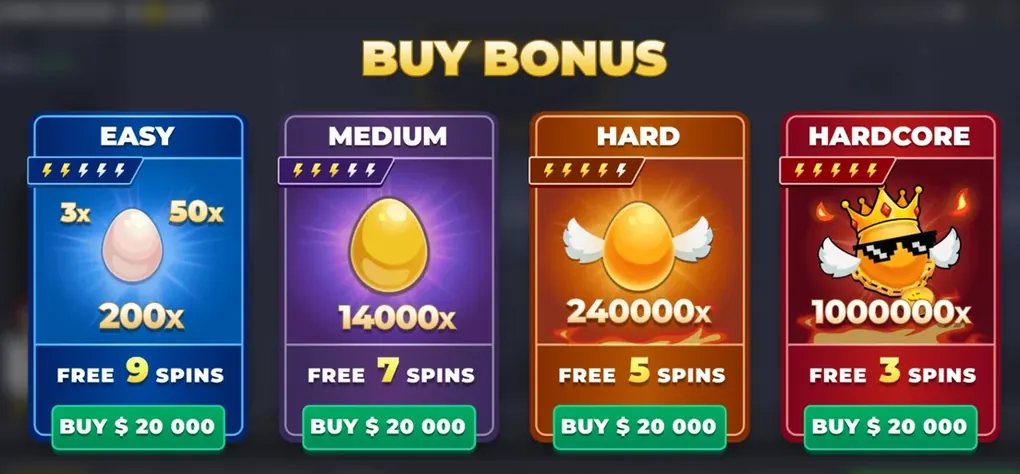
Three rows match. The Medium row does not, and it is not a small difference: the original's ceiling is nearly three times the sequel's on the card that sits in the middle of the risk range and therefore gets played most by people who have decided Easy is too slow.
If Medium is where you actually play, the first game is selling a longer ladder behind the same published return. That is a real reason to open the older entry, and it is the only one on this page.
Stakes and chips
Chicken Road 2 takes a maximum stake of 200 a round and puts quick chips of 1, 2, 5 and 10 under the box. The first game offers 2, 3, 8 and 20 instead.
For a balance converted from a few hundred taka this is the difference between a game you can play and one you can play twice. The smallest chip in the first game is 2 — double the smallest in the sequel — and on a small balance that single fact reshapes the whole session. What a small deposit actually buys goes through the arithmetic in taka rather than in casino units.
Free spins and the bonus counter
The bonus counter sits above the road. In Chicken Road 2 it fills with three fires; in the first game, three golden eggs, under a BONUS GAME label.
The free-spin counts are identical across builds and run downward with difficulty: 9 on Easy, 7 on Medium, 5 on Hard, 3 on Hardcore. Inside the bonus the chicken moves by itself and stops one step short of the danger, and the result is credited automatically — there is no decision to make and no cash-out to press.
The bonus buy, and what four purchases looked like
The buy price is the same rule in both titles: exactly 100 stakes. 500 at a stake of 5, 1,000 at 10, 2,000 at 20, and 20,000 at the Chicken Road 2 maximum of 200.
Four purchases recorded at the board, one per card:
| Card | Paid | Returned | Ratio |
|---|---|---|---|
| Easy | 20,000 | 24,314 | 1.22 |
| Medium | 500 | 463.75 | 0.93 |
| Hard | 1,000 | 565 | 0.57 |
| Hardcore | 2,000 | 357.60 | 0.18 |
Four results are not a return figure and predict nothing about a fifth purchase. They are printed here because the spread between them is the useful part: the harder the card, the more violently a single buy swings, and the Hardcore purchase came back at under a fifth of what it cost.
So which one should you open
If you play Easy, Hard or Hardcore: Chicken Road 2, for the smaller chips and the higher stake ceiling.
If you play Medium: the first game, for the ×14,000.
If you have not decided yet: open the demo on both and press through Medium on each until the difference in the ladder is something you have felt rather than read. Then check that the casino you intend to use actually carries the build you picked — lobbies do not always list both, and the casinos this site reads differ on which InOut titles they stock. And before any of that, work out how the money gets there and back, because that decision costs more than this one.